Online Gambling UK: What the Licence Buys, and What It Doesn't
 Available in GB
Online gambling in the UK runs on a licence from the Gambling Commission: it is illegal to offer commercial gambling to consumers in Great Britain without one, and that applies even if the operator holds a licence somewhere else. Offshore sites sit outside that system, which means UK protections and GamStop do not apply to them.

The Numbers Behind the Pitch
Great Britain’s gambling industry generated £17.5 billion of gross gambling yield in the year to March 2026, up 4.4% on the year before, and £8.3 billion of that came from remote casino, betting and bingo alone. That is the market the marketing is written for. It is also a market with a national self-exclusion scheme, a statutory levy, capped wagering requirements and a regulator that publishes what it does to sites that ignore all three. None of that is an accident, and none of it is free.
The scheme is called GamStop, and it is often typed “gamestop” — the word game suggests itself, and search engines forgive it. GamStop Online was established in June 2017 by the Remote Gambling Association at the request of what was then the Department for Digital, Culture, Media and Sport and the Gambling Commission, and it went live on 27 April 2018. Registration is free, takes a few minutes, and the block can take up to 24 hours to bite. It has held 614,738 consumers on its register as of July 2026, and more than one in two of them chose the maximum five-year term. I think that last figure tells you more about why people register than any promotional material ever will.
Here is the structural fact that matters more than any headline number. Since 31 March 2020, participation in GamStop has been a condition of a Gambling Commission licence, sitting in social responsibility code provision 3.5.5 of the Licence Conditions and Codes of Practice. A site without that licence has no obligation to check the register, and no reason to. Offshore sites that hold no UK licence are not connected to GamStop — reported by trade and press sources rather than stated on a regulator page, though consistent with GamStop’s own terms of use. Where help is concerned, the practical consequence is simple: the National Gambling Helpline, run by GamCare, is free on 0808 8020 133, 24 hours a day, every day of the year.
What the Rules Require of a UK Licence
A licence is not a badge. It is a list of obligations, and the list has grown teeth since 2020. Credit cards were banned for gambling from 14 April 2020. Online slots were capped at £5 per game cycle for adults from 9 April 2025, and at £2 for 18 to 24 year olds from 21 May 2025. From 31 October 2025 operators must prompt a customer to set a financial limit before their first deposit. From 19 January 2026, wagering requirements on bonus funds are capped at ten times, and mixed-product promotions are banned outright. The Commission chose a cap over a ban because licensees were applying up to 60 times.
Self-exclusion sits inside that same framework, and it is worth stating precisely because it is so often misdescribed. Registering with GamStop Online blocks a person from gambling with all online gambling companies licensed in Great Britain for six months, one year, five years, or five years with auto-renewal. It cannot be cancelled or deactivated during the exclusion period. When the chosen term ends, the exclusion stays in place until the person contacts GamStop to remove it. If they do not, GamStop holds their data through a further automatic seven-year self-exclusion period during which operators are told they were previously excluded. An offshore site is not a way round that; it is simply a place where nobody checks.
The regulator is also a regulator, not an ombudsman. It cannot resolve an individual complaint or get anyone’s money back, and it says so. That is what the ADR providers are for — and the figures there are worth reading. eCOGRA’s report for October 2024 to September 2025 records 911 disputes, of which “Deposits & Withdrawals” accounted for 150 valid disputes, with an average domestic resolution time of 31 days and 17.8% of completed disputes ruled in favour of the consumer. IBAS, covering the same period, handled 3,721 domestic disputes, 217 of them Banking/Financial, at an average 20 days. Consumers win a minority of the time. That is not cynicism; it is the base rate.
Best Online Gambling Sites UK Selection
The phrase “best online gambling sites uk” is the one every affiliate page fights over, and almost none of them answer it in a way a reader can check. So here is a comparison by criterion rather than by name. The numbers in this table are the numbers used in the text around it.
| Criterion | A Gambling Commission licence | An offshore licence (Curaçao, Anjouan, Kahnawake) | No licence at all (Costa Rica) |
|---|---|---|---|
| Minimum age | 18 | Varies by operator; Anjouan rules require age verification | Not enforced |
| Self-exclusion | GamStop Online, mandatory since 31 March 2020 | Separate scheme, if any; Kahnawake’s own is permanent and irrevocable | None |
| Bonus wagering cap | 10× maximum from 19 January 2026 | Ignition publishes 25×; trade coverage puts offshore welcome offers at 25×–40× | Whatever the terms say |
| Slots stake limit | £5 per game cycle, £2 for 18–24s | No equivalent | None |
| Credit cards | Banned since 14 April 2020 | Commonly accepted | Commonly accepted |
| Dispute route | Eight approved ADR providers, free to the consumer | Operator-nominated ADR; Anjouan requires an approved provider | |
| Funds if the operator fails | Three insolvency ratings, disclosed in writing | Anjouan requires segregation; not the same as protection | Nothing |
Two of those rows deserve a second look. The £5 slots cap has no offshore equivalent because no offshore regulator has any interest in how much a customer loses per spin. And the insolvency row is the one people skip: keeping customer funds in a separate client account does not mean customers get their money back if the operator becomes insolvent, and operators are legally allowed to hold customer money in overseas bank accounts.
Online UK Gambling and the Question of Legality
Is online gambling legal in the UK? Yes, through an operator holding a Gambling Commission licence, and no through one that does not. Section 33 of the Gambling Act 2005 makes it an offence to provide facilities for gambling without an operating licence, and on summary conviction that carries up to 51 weeks’ imprisonment, a fine up to level 5 on the standard scale, or both. It is immaterial whether the facilities are provided wholly or partly by remote communication, and whether they are provided inside or outside the UK. The offence attaches to the provider, not the adult customer — which is a distinction the marketing of offshore sites tends to blur, usually with the word “legal” doing work it cannot support.
The Commission’s enforcement record is not theatrical, but it is real. Since April 2024 its Illegal Markets team has issued 3,140 cease and desist and disruption notices, referred 447,778 Bing and Google URLs, and secured 287,961 URL removals. Measured across 160 illegal gambling websites, engagement fell by an average of 32% after disruption — and by 91% where a registrar block landed. GEO IP blocking managed 60%; Google removal only 30%. That ranking is the useful part. Making a site harder to find is not the same as making it unreachable, and the Commission says as much.
How many people gamble online in the UK? The Commission’s third annual Gambling Survey for Great Britain, published 16 July 2026 and based on 20,775 adults, found 47% had gambled in any form in the past four weeks, falling to 27% once lottery-only players are excluded. Among those who had gambled online in the past four weeks, 2.5% had engaged with illegal gambling websites, with a further 1.5% in the past 12 months. The Commission’s estimate across the whole population, including non-gamblers, is 0.6% in the past four weeks.
Gamble Online UK Player Checks
Anyone who wants to gamble online in the UK has, in practice, a short list of things worth checking before the first deposit. The Commission advises consumers to check that a business holds a British Gambling Commission licence and to click through to the public register to see whether the site’s activities and domain names match. That last clause is the one people skip, and it is the one that catches out cloned domains.
Then there is the identity check, which is where most of the friction in this market lives. Over a quarter of complaints reaching the Commission’s Contact Centre concern identity verification — and the specific grievance is being asked for documents only on attempting to withdraw. Licence condition 17.1.1 requires that a customer’s request to withdraw funds must not result in a requirement for additional information if the licensee could reasonably have requested it earlier. That prohibition does not block a request made under a separate legal duty, such as anti-money-laundering rules, which is the loophole operators lean on. The Commission expects identity and age checks to be brought forward to before a customer deposits or stakes, and has criticised onboarding on incomplete information — initials instead of full names, nicknames, commercial addresses instead of residential. Its worry is concrete: a customer onboarded with a middle name where a forename belongs can mismatch against records held elsewhere, including GamStop, and undermine the exclusion that was supposed to hold.
Withdrawals are the other half of it. The Commission’s data for June to September 2024 records 44.2 million withdrawals by customers of large online operators, of which 96.3% cleared automatically. The 3.5% that cleared within 24 hours and the 0.1% that took up to 48 hours are small, and they are also where every complaint comes from. The Commission’s Annual Report for 2024-25 states that withdrawal issues continue to cause most of the complaints it receives. Reverse withdrawals were permanently banned on 31 October 2021 under RTS requirement 14B: once a withdrawal has been requested, the customer must not be given the option to deposit using those funds. There is no fixed maximum number of days in the LCCP within which an operator must complete a payout. The regime relies on the fair-and-open condition, the identity-verification condition and the prohibition on unfair terms instead of a deadline — which I think is the honest way to run it, and also the reason the delays persist.
The Gambling Licence Behind the Homepage
Strip away the design and the welcome offer and every one of these sites turns on the same question: which regulator is standing behind the domain in front of you. That is not a slogan. It decides whether there is a register to check, whether there is a scheme that will refuse to let the site take a self-excluded customer, and whether there is anybody at all to complain to who is not the operator’s own support queue.
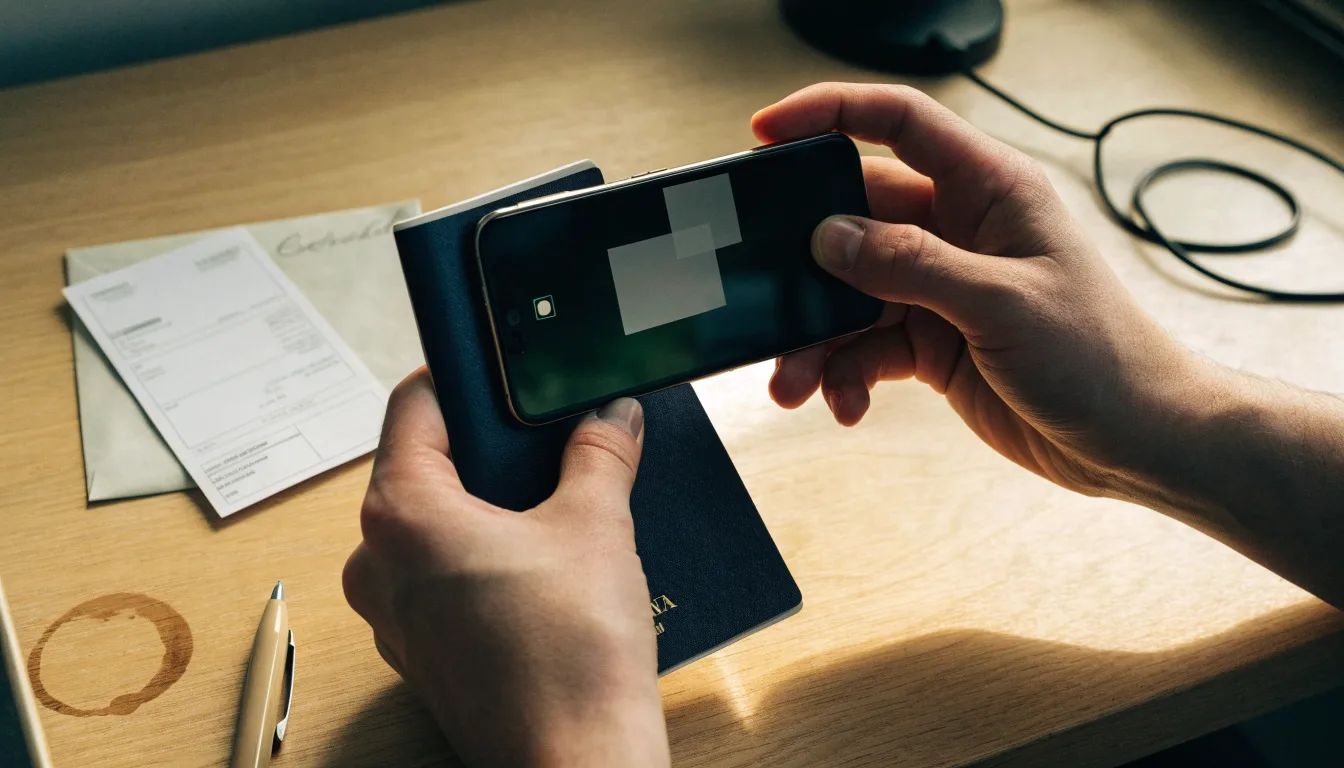
The first time is straightforward. A Gambling Commission-licensed operator must obtain and verify information establishing identity before permitting a customer to gamble, under licence condition 17. That is why a deposit is often declined until a name, address and date of birth have been matched — usually against databases such as credit reference agencies and the electoral roll, in which case no documents are needed at all. Where documents are requested they are typically a passport, a driving licence or a household bill. The Commission states it cannot give a timescale because the length varies; electronic verification can be instant, document review can take days.
Later it becomes less predictable. The anti-money-laundering rules bite at €2,000 deposited or withdrawn, in a single transaction or in transactions that appear to be linked, and the Commission treats linked transactions generously — same customer, same game, same session, or the same logged-on period. Remote casinos may use what the Commission calls the hybrid approach: identify and age-check at registration, then defer full verification until the €2,000 threshold is triggered. Above that, enhanced due diligence and source-of-wealth questions are expected for higher-risk relationships. This is legitimate. It is also the mechanism by which a withdrawal can sit for a fortnight.
The warning signs are therefore specific rather than atmospheric. Documents demanded for the first time at the moment of withdrawal, when the same information could plainly have been requested at deposit. A licence seal that does not resolve when clicked. A certificate displaying a different domain from the one being browsed — the Curaçao Gaming Authority is blunt about this, stating that where the certificate behind a seal shows another domain, the site is displaying a certificate belonging to another operator and should be considered unauthorised or fraudulent. And legacy licence numbers presented as current: Curaçao’s old “orange” sub-licence certificates ended on 15 October 2025, and a historic /JAZ number must not be treated as proof of a valid licence.
Five Signs an Operator Can Be Trusted
The Domain Appears on a Regulator’s Own Register
A Gambling Commission licence is checkable, and so is the specific domain: the Commission advises clicking through to the public register to see whether the site’s activities and domain names match. Quick check: open the register in a separate tab, search the trading name, and confirm the exact domain is listed rather than a similar one.
The Licence Seal Resolves Where It Should
A Curaçao Certificate of Operation Seal must redirect to the cert.cga.cw address when clicked, and the CGA states that if the seal differs in design, colour or format, the website is not authorised by it. Quick check: click the seal. If nothing happens, or it leads to a page showing someone else’s domain, stop there.
Bonus Terms Are Visible Before the Deposit
Under LCCP social responsibility code 5.1.9, all significant conditions applying to a marketing incentive must be provided transparently and prominently, and where online, displayed in full no further than one click away. Quick check: count the clicks to the full terms. If the wagering multiple, the maximum bet while wagering and any cashout cap are not all readable before depositing, the terms are being hidden rather than disclosed.
Withdrawal Terms Do Not Penalise Cashing Out
The Commission’s guidance prohibits any term imposing a maximum limit on the amount a consumer may withdraw from their deposit balance — its own example of a forbidden term being “You may withdraw up to £50 per day and up to £500 per week”. Operators should also not use terms giving them sole discretion to void or withhold winnings. Quick check: search the terms for “reserve the right”, “at our discretion” and any per-day withdrawal cap. One of those in the wrong place is a warning, not a quirk.
There Is a Named Dispute Route That Is Free
The Commission maintains a list of approved ADR providers — ADR Group, Pegasus ADR Service, an approved service, CEDR, eCOGRA, IBAS, ProMediate and Tattersalls Committee — and a licensed operator must let a customer refer an unresolved dispute to one free of charge if it has not been resolved to their satisfaction within eight weeks. Quick check: look for the named ADR provider in the complaints section. An operator that names none, or names its own internal review as the final word, has told you what it thinks of disputes.
How to Check a Site Before You Use It
- Find the operator on the regulator’s public register and match the domain exactly. A licence that covers a company but not the domain in front of you is not a licence for that site.
- Read the licence number, not the badge. A historic Curaçao /JAZ number is not evidence of a current licence, and legacy orange certificates ended on 15 October 2025.
- Open the bonus terms before depositing, and look for the three figures that decide everything. The wagering multiple, the maximum bet permitted while wagering, and any maximum cashout clause. In the UK the first is capped at ten times from 19 January 2026; offshore it is not.
- Check whether customer funds are protected if the operator fails. The licence requires a stated insolvency rating — “not protected”, “medium protection” or “high protection” — disclosed in writing and acknowledged before gambling. An operator rated “not protected” must remind the customer of that every six months.
- Confirm the complaints route, then keep your own record. Complain to the operator first, then to the named ADR provider, and note that a consumer must have been through the operator’s internal procedure before ADR will take the case — 72.3% of eCOGRA’s invalid disputes in 2024-25 failed on precisely that point.
- If gambling stops being a pastime, use the free help rather than a new site. The National Gambling Helpline, run by GamCare, is on 0808 8020 133, 24 hours a day, every day of the year.
The Offshore Comparison, Stated Plainly
Offshore sites are not licensed in Great Britain. The Gambling Commission’s remit extends only to websites that trade or advertise to customers in Great Britain, and those must hold a Commission licence. Where they do not, UK protections do not apply: no GamStop check, no ten-times wagering cap, no £5 slots limit, no credit card ban, no mandated financial limit prompt, no statutory levy contribution, no approved ADR list. The Commission issued an industry warning notice on 20 January 2025 about casino games supplied by licensed operators appearing on unlicensed websites available to GB consumers, noting that such sites often target customers who have self-excluded via GamStop and may have inadequate social responsibility and anti-money-laundering controls. That is the trade in one sentence.
Not every offshore regulator is a fiction, and I will not pretend otherwise. Anjouan Gaming publishes licence categories, fee schedules, a verification framework with QR codes linked to a public register, and rules requiring segregated player funds, certified random number generators, AML controls and age verification. It also requires licensees to designate an approved ADR provider and to resolve complaints within 30 days before escalation. Kahnawake has regulated interactive gaming since 1999 and runs a logo certificate programme that generates a Certificate of Good Standing on click. Those are real standards. They are also standards written for someone else’s market, with no obligation to check a British self-exclusion register and no route for a British consumer to the Commission. The Anjouan framework is itself contested — an ABC News investigation published on 31 December 2025 reported that a former attorney-general of the Comoros described Anjouan Licensing Services as “an illegal entity” and that the AOFA was stripped of recognised-regulator status by Comorian banking laws passed in 2013 and 2015, while the regulator’s own licensees point to a legal opinion from a firm regulated in England and Wales. I cannot resolve that from here, and neither can a player reading a website.
Then there are the terms that build in delay, which are the tell most people miss. A maximum cashout clause limiting winnings generated with bonus funds to a multiple of the credited bonus amount. A maximum bet while wagering — one offshore operator caps it at €5 for regular players and €10 for VIPs and rejects any bet above the limit. A rule that a no-deposit bonus cannot be redeemed consecutively, with subsequent winnings removed if it is. Wagering contribution charts where slots count 100% and roulette 5%, so a player’s progress is one-twentieth of what they assumed. None of these is unlawful offshore. All of them are the reason the UK rules exist.
Online Gambling Statistics UK Market Overview
Online gambling statistics in the UK are unusually good, which is the one advantage of living under a regulator that counts. Total online gross gambling yield for January to March 2026 was £1.55 billion, up 7% year on year, with 26.8 billion bets and spins and 13.4 million average monthly active accounts. Online slots alone took £773 million, up 12%, across 25.1 billion spins. The Commission’s own dataset covers roughly 70% of the online market and should not be compared with its separate industry statistics.

The harm figures are published with the same regularity, and they are less quotable. In the 2025 survey year, 2.4% of participants scored 8 or more on the Problem Gambling Severity Index, a figure the Commission describes as stable across three years — 2.5%, 2.7%, 2.4%. A further 3.5% scored 3 to 7. Of adults who had gambled in the past 12 months, 3.4% had sought support because of their own gambling, and 2.7% reported at least one severe consequence, with relationship breakdown the most reported at 1.7%. Stable is not the same as small. Two and a half per cent of a population is a lot of people, and the self-exclusion register holding 614,738 names is what that looks like when it is counted properly.
The treatment system behind those numbers is now funded by the statutory levy, introduced by the Gambling Levy Regulations 2025 and commenced on 6 April 2025, which raised just under £120 million in its first year, ringfenced solely for research, prevention and treatment. Online operators pay 1.1% of previous-year gross gambling yield. From 1 April 2026 NHS England took commissioning responsibility for gambling-harms treatment in England, funded by approximately £100 million a year split 50% treatment, 20% research and 30% prevention. The National Gambling Helpline remains free on 0808 8020 133, and Citizens Advice Scotland runs a gambling support advice line on 0800 328 1131, Monday to Friday, 10am to 3pm.
Small Print in Offers
Online gambling offers in the UK are more constrained than they have ever been, and that is worth knowing before comparing them with what an offshore site dangles. Since 19 January 2026 licensees cannot apply wagering requirements over a maximum of ten times, cannot include more than one type of gambling product within an incentive, must set out terms that are clear, transparent, fair and readily accessible, and must offer high-value or VIP incentives in a manner consistent with the licensing objectives. The mixed-product ban has an instructive edge: “Bet £5 and get £10 free bet” is compliant, while “Bet £5 to get 20 free spins” is not, because it mixes product types between the activity and the prize.
Offshore, the same offer can carry a 25-times playthrough, a maximum cashout cap and a maximum bet while wagering, and none of it breaks a rule anywhere that matters. The reason to know this is not to compare value. It is to recognise that the number attached to a bonus is a term about the operator’s exposure, not a gift, and the UK’s ten-times cap exists because the industry’s own answer to that question used to be 60.
Gambling UK Online Help
The help is free, and it is separate from the industry. GamCare runs the National Gambling Helpline on 0808 8020 133, 24 hours a day, every day of the year, reachable also by live chat and WhatsApp. Callers in Wales have a dedicated number, 0808 2819 265. BeGambleAware is the public-facing brand of the charity GambleAware and directs people to the same helpline. GamFam, a registered charity set up by people affected by the gambling of family and friends, runs a five-stage peer-support programme. Gamblers Anonymous England, Wales and Ulster can be reached on 0330 094 0322 and runs around 250 meeting locations with no appointment needed. Gam-Anon UK & Ireland supports family and friends whether or not the gambler attends GA. The NHS National Gambling Clinic is at 69 Warwick Road, London SW5 9HB, on 020 7381 7722, and NHS England has opened 15 specialist gambling clinics since 2019.
The blocking tools are worth naming too, because they work at a different layer. GamStop signposts Gamban and BetBlocker, both installed on a phone, tablet or computer. BetBlocker is a non-profit that states it blocks over 1,368,000 gambling websites and 3,100 apps, requires no registration and is free worldwide. Gamban states it blocks licensed and unlicensed sites alike and that its protection is designed to be as difficult to remove as possible; its free UK licence scheme, TalkBanStop, ended on 31 March 2026, so it is free in Wales but costs £4.99 a month or £29.99 a year in England and Scotland after a seven-day trial. Bank gambling blocks are the third layer, applied at card level, so they must be activated on each card. Most banks use a cooling-off period of either 48 or 72 hours before gambling transactions are allowed again, and blocks do not affect a credit score.
None of these is a substitute for self-exclusion, and none of them is a workaround for it. A GamStop exclusion holds for its full term and then stays in place until the person contacts GamStop to remove it.
Gambling Online UK Rules and Tax
UK online gambling tax is not a thing a player pays. Duty is levied on operators, not on winnings, and a consumer’s gambling winnings are not subject to UK income tax or capital gains tax. The 1.1% statutory levy on online operators’ previous-year gross gambling yield is likewise an operator charge. What a player does face is the licence regime: the £5 slots cap, the ten-times wagering cap, the financial limit prompt before the first deposit, the ban on credit cards, and identity verification before gambling.
Online gambling rules in the UK are also being extended rather than trimmed. Financial vulnerability checks became a licensing requirement on remote gambling businesses in August 2024, initially at £500 net deposits over a rolling 30-day period, lowered to £150 from 28 February 2025, and may only use publicly available risk flags such as a bankruptcy order, a County Court Judgment or an Individual Voluntary Arrangement. Financial Risk Assessments were announced on 7 July 2026 to be introduced in stages, starting with the largest operators at £5,000 net deposits in a rolling 24-hour period for customers aged 25 and over and £2,500 for under-25s, and ending at thresholds of £1,000 in 24 hours or £3,000 over 90 days for the over-25s. The Commission confirmed that during the early stages no enforcement action will be taken for a failure to act following an assessment. The £5,000 first-stage threshold is a spend pattern fewer than 0.5% of customers exceed.
Frequently Asked Questions
Is online gambling legal in the UK?
Yes, when the operator holds a Gambling Commission licence. Section 33 of the Gambling Act 2005 makes it an offence to provide facilities for gambling without an operating licence, and the Commission states plainly that this includes operators holding a licence in another jurisdiction. The offence falls on the provider rather than the adult customer, which is why offshore marketing leans so hard on the word “legal” — the customer is not the one being prosecuted, and the protection is not there either.
How many online gambling sites are there in the UK?
There is no clean published count, and the honest answer is that the number depends on what is being counted. The Commission’s illegal gambling dashboard recorded 586 illegal gambling websites accessible to GB consumers in September 2026, 4% more than September 2025, and 311 of them had disruption action taken against them in the second quarter of 2026-27. That is the illegal tail. The licensed end is a much shorter list, because a licence is checkable one domain at a time.
How many people gamble online in the UK?
The Gambling Survey for Great Britain, published 16 July 2026 from 20,775 adults, found 47% had gambled in any form in the past four weeks, falling to 27% excluding lottery-only players. In the quarter to March 2026 the Commission recorded 13.4 million average monthly active online accounts and 26.8 billion bets and spins. Account numbers are not people, since one person can hold several, and the Commission warns its operator dataset covers about 70% of the market.
What is the safest kind of online gambling site in the UK?
The one whose licence and domain both appear on the Gambling Commission’s public register, because that is what makes the rest of the protections apply: the GamStop check, the ten-times wagering cap, the ban on withdrawal limits, the named ADR provider and the disclosed insolvency rating for customer funds. The Commission advises checking the register and confirming the site’s activities and domain names match. A seal that does not resolve when clicked has answered the question already.
Can an offshore casino be used instead of GamStop?
No, and framing it that way misunderstands what a GamStop registration is. An exclusion holds for its full term and then remains in place until the person contacts GamStop to remove it, and registering cannot be cancelled during the term. Offshore sites are not connected to GamStop because the scheme’s obligations apply only to Gambling Commission licensees. The Commission’s January 2025 warning notice noted that unlicensed sites often target self-excluded customers.
What are the biggest online gambling companies in the UK?
The Commission does not rank operators and this page does not name brands, but the sector data gives the shape of it. Remote casino, betting and bingo generated £8.3 billion of gross gambling yield in the year to March 2026, up 6.9%, out of £17.5 billion for the whole industry. Online slots took £773 million in the March 2026 quarter alone, up 12%. Concentration is high, and the largest operators are the ones whose figures the Commission publishes quarterly.
Do UK players pay tax on online gambling winnings?
No. Duty is charged to operators rather than to players, and a consumer’s gambling winnings are not subject to UK income tax or capital gains tax. What players do face is the licence regime rather than the tax regime: the £5 slots stake cap, the ten-times wagering cap on bonuses from 19 January 2026, the prompt to set a financial limit before a first deposit, the credit card ban, and identity verification before gambling.
Market Context
The British market is the most documented gambling market in the world, and the documentation is the product: a licence that can be checked domain by domain, a self-exclusion register of 614,738 people that an offshore site has no duty to consult, and a complaints route that rules for the consumer 17.8% of the time — which is a low number, and a real one, and more than an unlicensed site offers. If any of this stops being a pastime rather than a subject, the National Gambling Helpline is free on 0808 8020 133, 24 hours a day, every day of the year. Page reviewed 18 November 2026.
UK Gambling Sites – Quick Withdrawal Casino UK
Content created by the «Quick Withdrawal Casino UK» team