Real Money Casino App iPhone: The Store, the Licence and the Small Print
 Available in GB
A real money casino app iPhone users can install from the UK App Store belongs to an operator licensed by the Gambling Commission; apps from offshore operators usually arrive through a web shortcut or a downloaded profile instead, carry no British licence, no GamStop block and no access to UK dispute schemes. The scheme’s name is often typed “gamestop”.

I have spent years reading licence conditions and the terms nobody opens, and the phone is where the gap between the two shows most clearly. A real money casino app for iPhone looks identical whether it belongs to a firm the Gambling Commission supervises or to a company licensed in Curaçao, Anjouan or nowhere in particular. The screens are polished, the slot spins at the same speed, the welcome offer uses the same font. What differs is everything behind the screen: who can be made to answer for a refused withdrawal, whether a self-exclusion holds, whether a deposit limit means anything, and who picks up the pieces when it goes wrong. That difference is the whole subject of this page, and it is a difference of harm as much as of paperwork. Britain’s regulated market generated £17.5 billion of gross gambling yield in the year to March 2026, and the Commission’s own analysis suggests the overwhelming majority of play stays inside it. But “most” is not “all”, and the minority is where the damage lives.
How the Licence Decides Protection
The head phrase on this page is “real money casino app iphone”, and the honest starting point is that the licence, not the app, decides what protection exists. An iPhone cannot tell the difference. iOS will happily run a progressive web app from a Curaçao-licensed operator, and Safari will happily remember the login.
Since 31 March 2020, participation in the national online self-exclusion scheme has been a condition of every Gambling Commission licence — the requirement sits in social responsibility code provision 3.5.5 of the Licence Conditions and Codes of Practice. That single rule is why the app question is really a licence question. A British-licensed operator must check its whole customer base against the register at least every 24 hours, a duty the Commission added in April 2020. Offshore sites that hold no Commission licence are not connected to the scheme and are not covered by it, and that limitation is not a technicality anyone should skim: it is reported that they sit outside the scheme entirely, which is consistent with the scheme’s own terms.
Early and plainly: offshore gambling sites are not licensed in Great Britain, UK protections do not apply to them, and the operator commits a criminal offence under section 33 of the Gambling Act 2005 if it provides gambling facilities to consumers here without a Commission licence — whether it holds a licence somewhere else is immaterial. That is the law’s problem, but the consequences land on the player.
If gambling is causing harm, help is free and immediate: the National Gambling Helpline, run by GamCare, is on 0808 8020 133, 24 hours a day, every day of the year, and callers in Wales can also use 0808 2819 265. NHS gambling treatment services, GamFam and Gamblers Anonymous all exist for the same reason.
The National Self-Exclusion Statistics
Here is the number I would put on the wall. As of July 2026 the national online self-exclusion scheme reported 614,738 consumers currently on the register, and more than one in two of them had chosen the maximum five-year exclusion. In the same period the scheme recorded a 16 per cent year-on-year rise in registrations in the first half of 2026, with May 2026 setting a monthly record of 12,236 sign-ups. Under-25s made up nearly one in three of all self-exclusions in that half-year, a 26 per cent annual increase.
Those are figures from the scheme itself, published 16 July 2026, covering 1 January to 30 June 2026. They matter to an app page because the register is checked against accounts, not against good intentions. A person on that register who opens an account at a British-licensed operator should be blocked, and if the operator’s checks are sloppy, the operator is the one in breach. At an offshore site, the check simply does not happen.
And self-exclusion, wherever it comes up, is a fact and not a mood: once registered, it holds for the full chosen term, cannot be cancelled during it, and stays in place after the term ends until the person contacts the scheme to remove it. Nothing about a phone, a VPN or an unregulated app changes that.
The Two Sides of the App Market
There are only two sides. On one side sit operators licensed by the Gambling Commission, whose apps are subject to stake limits, bonus caps, withdrawal rules and a complaint route with real teeth. On the other sit operators licensed in Curaçao, Anjouan, Kahnawà:ke or Costa Rica — or, in the Costa Rican case, under no formal licensing framework at all, since the “data processing licence” sometimes quoted in the trade is not a gambling licence in any legal sense, and a bill that would have created one was rejected in early 2026.
The good offshore operators exist. I will not pretend otherwise. Some segregate player funds, publish terms that are readable, and answer complaints through a named dispute body — Anjouan, for instance, requires licensees to appoint an approved alternative dispute resolution provider and expects complaints resolved within 30 days. But the structure is thinner: the fees are lower, the supervision lighter, the reach of the regulator into daily behaviour close to nil.
The bad ones are the reason this page exists. The Commission issued an industry warning notice on 20 January 2025 about casino games from licensed suppliers appearing on unlicensed websites, noting that such sites often target people who have self-excluded and may have inadequate social responsibility and anti-money-laundering controls. Read that again: the pitch to the excluded is a feature of that market, not an accident. The Commission’s Illegal Markets team has issued 3,140 cease and desist and disruption notices since April 2024 and referred 447,778 search URLs, and it measures an average 32 per cent fall in engagement across 160 illegal sites after disruption. The market is being squeezed. It has not been closed.
Comparison by Licence, Not by Brand
I have not named a single operator, and I am not going to. What follows compares the structure of the licence a player is actually dealing with — which is the only comparison that survives contact with a withdrawal request.
| Licence / regime | What it costs the operator | Annual or recurring cost | What a player gets |
|---|---|---|---|
| Great Britain (Gambling Commission) | Application and licence fees; statutory levy of 1.1% of previous-year gross gambling yield for online operators | Levy payable by 1 October each year | Self-exclusion enforced, slots stakes capped at £5 (£2 for 18–24s), bonus wagering capped at 10×, reverse withdrawals banned, ADR route, funds-protection rating disclosed |
| Malta (MGA) | €5,000 non-refundable application fee; minimum share capital €100,000 for Type 1 and 2 | €25,000 fixed annual licence fee plus 5% gaming tax on revenue | EU-facing supervision, published list of unauthorised URLs, complaint form, no British protections |
| Curaçao (CGA, post-LOK) | €4,592 non-refundable application fee plus €150 per beneficial owner | €47,450 total annual B2C fee, payable by 15 January | Direct CGA supervision since the LOK took effect on 24 December 2024; legacy orange certificates ended 15 October 2025; no British self-exclusion or ADR |
| Anjouan | €17,828 one-time B2C licence issuance, plus €500 per extra domain | €17,828 annual renewal | Segregated player funds and certified RNGs required on paper; named ADR provider; licence described by Comoros officials as sold by an entity they call illegal |
| Kahnawà:ke | CPA application fee rising from USD 35,000 to USD 40,000 on 1 January 2027 | Annual CPA fee USD 20,000, unchanged | Long-established regulator; self-exclusion under its rules is permanent and irrevocable, and breach forfeits funds to charity |
| Costa Rica | No comprehensive licensing regime; the “data processing licence” is not a gambling licence | Not applicable | Nothing regulatory to compare; games of chance are generally prohibited under Costa Rican law |
The Curaçao column is worth a second look, because it changed recently and the internet has not caught up. The National Ordinance on Games of Chance took effect on 24 December 2024 and replaced the old master-licence and sub-licence model with direct licensing by the Curaçao Gaming Authority. The legacy “orange” sub-licence certificates ended on 15 October 2025. A historic /JAZ number or an old seal must not be treated as proof of a current licence — and the authority has said its previous online portal will not return, so the usual click-to-verify check is temporarily harder than it used to be.
The Importance of Identity Checks
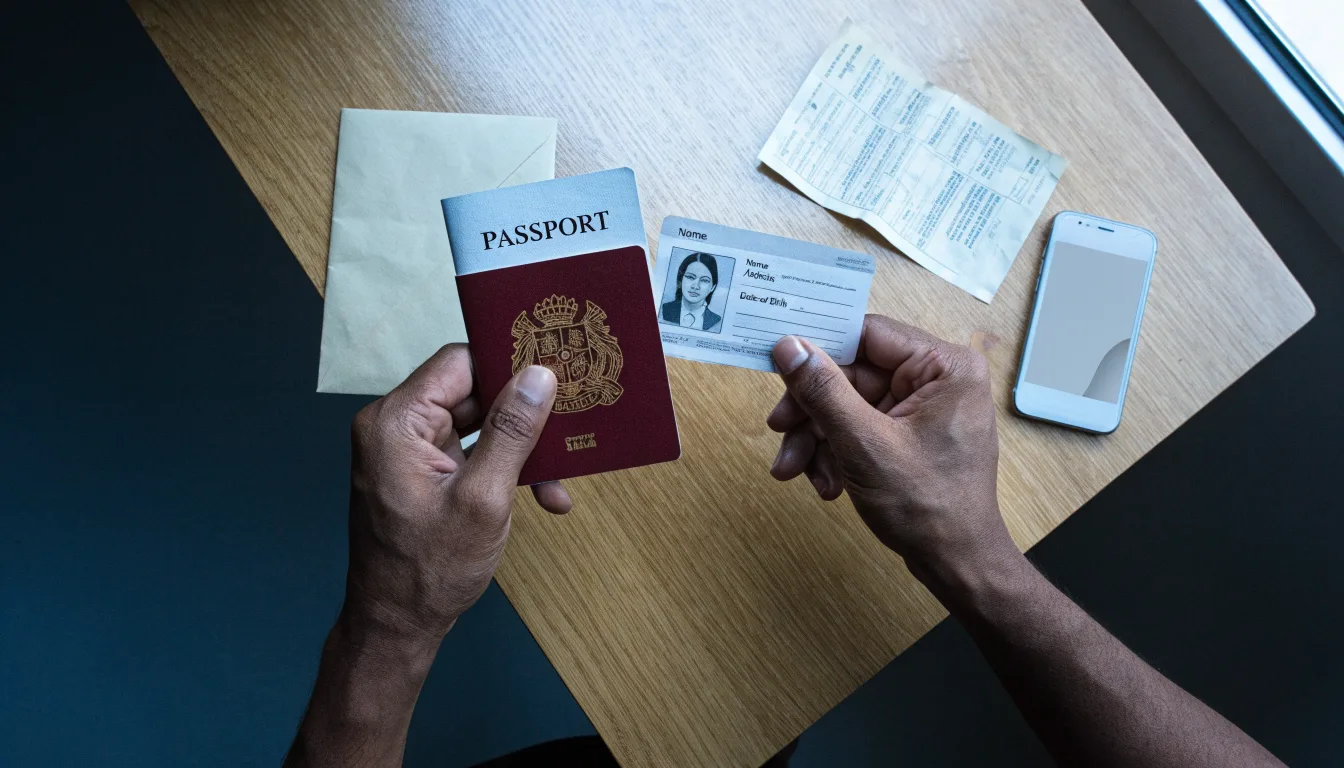
Everything about a casino app real money iPhone experience comes down to identity verification, and it is where the money gets stuck. The first time, and every time after, the mechanism is the same, but the timing is not.
On a British-licensed site the rule is that identity must be established before the customer is permitted to gamble. Licence Condition 17, introduced on 7 May 2019, requires name, address and date of birth, verified against a source independent of the customer. In practice most people sail through in seconds because the operator matches them against the electoral roll or a credit reference database. Documents are only needed when that match fails: a passport, a driving licence, a household bill. The Commission does not specify which documents a business should ask for, and says it cannot give a timescale because the process varies.
The trap is the deferred version. A remote casino may identify a customer and check their age at registration and then put off full verification until the anti-money-laundering threshold is reached — €2,000 deposited, withdrawn or won, counting linked transactions in a single logged-on period. That is the “hybrid approach” the Commission describes, and it is lawful. It is also the reason a first withdrawal sometimes stops dead: the paperwork arrives at the moment of cashing out rather than at the moment of signing up.
What the rules do say is that a withdrawal request must not trigger a demand for information the licensee could reasonably have requested earlier — Licence Condition 17.1.1 — and that a business delaying a withdrawal for insufficient ID may be in breach and may face regulatory action. Over a quarter of complaints reaching the Commission’s contact centre concern identity verification, which tells you how often the theory and the practice diverge. There is also a nastier edge: the Commission has warned about operators onboarding customers on partial or equivocal verification, and noted that registering someone with a middle name instead of a forename can create mismatches with records held elsewhere — including the self-exclusion register — and so undermine the very check meant to protect them.
Warning signs to watch for: documents demanded for the first time at withdrawal and never at deposit; a request for a selfie with no stated reason; a demand for source-of-funds paperwork far below the £2,000 threshold; a term reserving the operator’s sole discretion to void winnings; and any refusal to let a deposit balance be withdrawn while a bonus is active.
Five Signs an App or Operator Can Be Trusted
The licence is on the Commission’s public register
Check the licence, not the logo. The Gambling Commission’s public register lists the domains and activities a licence covers, and the Commission advises clicking through to confirm the site’s activities and domain names actually match. If the domain is not there, nothing else on this list matters.
Identity checks happen before you play, not at cash-out
Ask, before depositing, what documents might be needed and when. A British-licensed operator should tell customers what types of identity documents or information they may need, in what circumstances and in what form, before they deposit. If the answer is vague and the terms are silent, assume the request will arrive on withdrawal day.
Withdrawals are not treated as a request to be managed
Look for terms that cap how much can be withdrawn, or that permit only one withdrawal at a time. The Commission’s guidance calls a “£50 per day, £500 per week” limit a prohibited term, and in October 2026 a £900,000 regulatory settlement followed failures that included a one-withdrawal-at-a-time term and manual review of every fifth or tenth withdrawal. Real-time payout through Visa Direct is available within 30 minutes of approval; the technology is not the bottleneck.
The bonus terms are short, and the wagering cap is visible
Since 19 January 2026 British licensees cannot apply wagering requirements above ten times, and cannot mix two or more gambling products inside one incentive. The Commission said the cap “will take out extreme levels as some licensees currently apply up to 60 times wagering requirements”. If a welcome offer quotes 35×, 40× or 50×, it is not a British-licensed product, and no amount of fine print will make it one.
There is a named dispute route and a funds-protection rating
A British-licensed operator must offer referral to an approved alternative dispute resolution provider free of charge if a complaint is not resolved within eight weeks. It must also state whether customer funds are protected in the event of insolvency, using the ratings “not protected”, “medium protection” or “high protection”. Both are checkable before depositing, in the terms, in plain English.
How to Judge an App Before You Install It
- Find the licence on the public register first. Search the Commission’s register for the operator and the domain, and confirm the activities and domain names match. Reason: an app is a shop window; the licence is the thing that can be enforced against, and a domain absent from the register is a domain outside British supervision.
- Read the withdrawal section of the terms before the bonus section. Look for maximum withdrawal limits, one-withdrawal-at-a-time clauses, processing fees and stated timeframes. Reason: withdrawal friction is the number one subject of consumer complaints to the Commission, and it is written down in advance if you look.
- Set a deposit limit at the point of first deposit. Since 31 October 2025 British licensees must prompt customers to set a financial limit before their first deposit, present it as the default option, and remind them every six months to review it. Reason: a limit set while calm is worth more than a decision made while not.
- Check the app actually is an app, or just a web shortcut. Many “iPhone apps” in this market are progressive web apps added to the home screen. Reason: a browser shortcut is not covered by App Store review, and it also means the operator has no reason to keep it current or to remove it when a licence lapses.
- Register with the national self-exclusion scheme if gambling has become a problem, and remember the term is binding. Registration blocks access to all British-licensed online operators for 6 months, 1 year, 5 years or 5 years with auto-renewal, takes a few minutes and can take up to 24 hours to bite. Reason: it is the only block that operates across the whole licensed market, and it cannot be undone during its term.
- Add a bank block as a second layer. The Commission’s list of banks offering a gambling block, last updated 16 October 2026, names Bank of Scotland, Barclays, Halifax, HSBC, Lloyds Bank, MBNA, Monzo, NatWest, Royal Bank of Scotland, Santander and Starling. Reason: blocks work at card level by declining payments under gambling merchant codes, must be activated on each card, and most banks apply a 48- or 72-hour cooling-off before gambling payments resume.
What the Numbers Say About Payouts
If an app is worth anything, it pays. The Commission’s data covering June to September 2024 recorded 44.2 million withdrawals by customers of large online operators: 96.3 per cent cleared automatically, 3.5 per cent within 24 hours, 0.1 per cent up to 48 hours. Earlier data from some of the largest firms showed around 99 per cent of withdrawal requests approved, processed and fulfilled within 24 to 48 hours. Complaints coded “Withdrawals and/or financial transactions” to the Commission’s contact centre fell from 2,416 in the year to December 2022 to 1,791 in the year to December 2025.
That is the benchmark against which an offshore app should be judged, and it usually is not judged at all, because there is nowhere to complain. Reverse withdrawals — the old trick of letting a player cancel a payout and keep playing — were banned outright for remote operators from 31 October 2021 under requirement 14B, which states consumers must not be given the option to cancel their withdrawal request.
The Complaint Route
When a payout is refused, the route matters more than the grievance. A British-licensed operator must let a customer refer a dispute to an approved alternative dispute resolution provider free of charge if it is not resolved to the customer’s satisfaction within eight weeks of the complaint, and the customer must have gone through the operator’s own procedure first. The Commission itself is a regulator, not an ombudsman: it cannot resolve individual complaints or get money back, though it records every complaint and typically refers disputes onward.

The approved providers include IBAS, eCOGRA, CEDR, ADR Group, Pegasus ADR Service, ProMediate and the Tattersalls Committee. Their published statistics are a useful reality check on how often a player wins. eCOGRA’s report for 1 October 2024 to 30 September 2025 records 911 disputes received, 150 of them valid “Deposits & Withdrawals” cases, an average of 31 days to resolve a domestic dispute, and 17.8 per cent of completed disputes ruled in favour of the consumer. IBAS’s report for the same period records 3,721 domestic disputes, 217 of them banking or financial, an average completion time of 20 days, and 65 consumer complaints upheld by written decision against 693 not upheld.
Read those ratios honestly: most disputes go the operator’s way, which is exactly why the licence, the terms and the deposit limit matter more than the complaint. Offshore, none of this exists — and the ADR bodies on the Commission’s list will not touch a site that is not on their approved list.
Where the Harm Lands
The harm story in this market is not theoretical, and it is not evenly spread. The Gambling Survey for Great Britain, published 16 July 2026 and based on 20,775 adults with fieldwork from January 2025 to January 2026, found 2.4 per cent of participants with a PGSI score of 8 or more, 3.5 per cent scoring 3 to 7, and 7.8 per cent scoring 1 to 2. That top figure has been stable across three years: 2.5 per cent, 2.7 per cent, 2.4 per cent. Among adults who had gambled in the past 12 months, 2.7 per cent reported one or more severe consequence, relationship breakdown the most common at 1.7 per cent.
Scale of exposure is harder to pin down and the estimates disagree, which is itself a finding. The Commission’s analysis published 5 November 2026 estimates that 0.6 per cent of respondents, across the whole population, engaged with illegal gambling websites in the past four weeks, rising to 2.5 per cent among those who had gambled online in that period. H2 Gambling Capital puts stakes with illegal operators at £16.6 billion in 2025, up from about £5 billion in 2019, with the legally staked share falling from 97 to 92 per cent. A BGC-commissioned Frontier Economics study conservatively estimated £2.7 billion staked annually online on the black market. Yield Sec, working for the Campaign for Fairer Gambling, put the unregulated share at 9 per cent of gross gambling revenue in 2025.
I do not think these numbers can all be right, and the Commission’s own October 2024 methodology admits it cannot see activity hidden behind VPNs. What I am confident about is the direction of travel and the mechanism: the Commission’s Illegal Markets team reported an average 32 per cent fall in engagement across 160 disrupted sites, with registrar blocks producing a 91 per cent average reduction and GEO IP blocking 60 per cent — far ahead of search-engine removal at 30 per cent. Removing a site from Google makes it harder to find. It does not block it.
There is one more figure that ought to be printed on every offshore welcome offer: the Commission’s analysis published 5 November 2026 recorded 586 illegal gambling websites accessible to British consumers in September 2026, and 311 sites disrupted in the second quarter of 2026 to 2027, 38 per cent more than the previous quarter. A market that needs 311 disruptions a quarter is not a market where an app icon on a home screen is a safe thing to tap.
The Legal Position in Plain Words
Section 33 of the Gambling Act 2005 makes it an offence to provide facilities for gambling without an operating licence, and it applies whether the facilities are provided wholly or partly by remote communication, and whether they are provided inside or outside the United Kingdom. On summary conviction the offence carries imprisonment for a term not exceeding 51 weeks, a fine not exceeding level 5 on the standard scale, or both — six months in Scotland. The Commission states plainly that it is illegal to offer commercial gambling services to consumers in Great Britain without a Commission licence, including where the operator holds a licence in another jurisdiction.
Note where the offence sits. It attaches to the provider, not to the adult who taps the icon — the Act’s offences around children and young people confirm the general pattern. Advertising is a separate matter: section 330 covers knowingly advertising unlawful gambling and section 331 advertising foreign gambling facilities. But the practical consequence for a player is not a court date. It is that every protection built up in Britain over two decades — the self-exclusion register, the ten-times wagering cap, the £5 slots stake limit, the reverse-withdrawal ban, the eight-week ADR route, the funds-protection disclosure — simply stops at the edge of the licence.
Frequently Asked Questions
Can you get a real money casino app on an iPhone in the UK?
Yes, from operators licensed by the Gambling Commission, and those apps are subject to British rules. Many sites in this market are not true apps at all but progressive web apps saved to the home screen, which sit outside App Store review. Offshore operators also offer installable apps and downloaded profiles, but they hold no British licence and none of the protections attached to one.
Do iPhone casino apps that pay real money actually pay quickly?
At British-licensed operators, usually yes. Commission data for June to September 2024 covering 44.2 million withdrawals by customers of large online operators shows 96.3 per cent cleared automatically and 3.5 per cent within 24 hours. The bottleneck is rarely the payment rail — Visa Direct payouts can be available within 30 minutes of approval — but identity verification triggered for the first time at withdrawal.
Is a casino app on an iPhone covered by GamStop?
Only if the operator holds a Gambling Commission licence. Participation in the national online self-exclusion scheme has been a licence condition since 31 March 2020, and operators must check their entire customer base at least every 24 hours. Offshore sites that hold no Commission licence are not connected to the scheme and are not covered by it, so a registration there blocks nothing.
What wagering requirement should a UK player expect on a casino app bonus?
No more than ten times, since 19 January 2026, when the Commission’s bonus rules came into force under social responsibility code 5.1.1. The same rules ban mixing two or more gambling products inside one incentive. Offers quoting 35×, 40× or 50× are offshore products, and the Commission has said the cap exists because some licensees were applying up to 60×.
How long does a self-exclusion last, and can it be lifted early?
It holds for the full chosen term — 6 months, 1 year, 5 years or 5 years with auto-renewal — and cannot be cancelled or deactivated during it. When the term ends it stays in place until the person contacts the scheme to remove it. In July 2026 the scheme reported 614,738 consumers currently on the register, more than half of them on the five-year option.
Where does a UK player get help if gambling is causing harm?
The National Gambling Helpline, run by GamCare, is free on 0808 8020 133, 24 hours a day, every day of the year, with callers in Wales able to use 0808 2819 265. NHS gambling treatment services, GamFam for families, Gam-Anon and Gamblers Anonymous England, Wales and Ulster on 0330 094 0322 are also available. Citizens Advice can help with the debt that often follows.
Assessing Casino App Safety
An iPhone cannot verify a licence, and that is the whole problem: the app that looks most polished is often the one with the thinnest supervision behind it, and the protections a British licence buys — a self-exclusion register that holds, a bonus cap of ten times, a slots stake limit of £5, a payout route with an eight-week dispute deadline — are exactly the things an offshore operator has no obligation to provide. The scheme now reports 614,738 people on its register, and the Commission disrupted 311 illegal sites in a single quarter. Choose the side of the line with a regulator on it, and if the gambling has stopped being fun, the National Gambling Helpline is on 0808 8020 133, free, at any hour.
Casino Apps – Quick Withdrawal Casino UK
Content created by the «Quick Withdrawal Casino UK» team